Let’s talk about the real problem: You know your child needs hearing protection. You’ve seen the recommendations—noise-canceling headphones help kids focus, sleep on flights, and protect developing ears. But then you look at the prices. $80. $120. $150. For a child who loses socks daily and drops everything they touch.
It stings. You want to protect your kid’s hearing without spending rent money on something that might end up in the couch cushions by Thursday. And honestly? The marketing makes it worse — every brand claims their $100+ headphones are “essential,” making budget options feel like a compromise on your child’s safety.
Here’s what nobody tells you: Affordable noise-canceling headphones for kids have gotten remarkably good in 2026. You don’t need to spend triple digits to get safe, effective noise cancellation. This guide shows you exactly what to look for, what to skip, and which budget-friendly picks deliver genuine performance without the premium price tag.
What Makes Noise Cancelling Headphones “Safe” for Kids’ Listening?
Before we talk about affordability, let’s establish what “safe” actually means. Safe listening headphones for children must meet specific criteria that go beyond adult headphones:
Volume Limiting: The WHO recommends children don’t exceed 85 dB. Quality kids’ headphones have a hardware-level volume cap that cannot be bypassed through software or settings. This is the single most important safety feature — more important than ANC quality, comfort, or brand name.
Appropriate Sound Pressure: Even at max volume, the drivers should produce clean, undistorted sound. Cheap adult headphones often distort at lower volumes, causing kids to push the volume higher to compensate—defeating the purpose entirely.
Safe Materials: Kids’ headphones contact skin for hours. Look for BPA-free plastics, hypoallergenic ear pad materials, and certifications like CPSIA compliance. No child should develop a rash from their safety device.
Proper Fit: Headphones that are too large create gaps, reducing effectiveness and requiring higher volume to compensate. Size-appropriate designs for children’s heads ensure both safety and performance.
How Much Should You Actually Spend on Kids’ Noise Cancelling Headphones?
Here’s the honest pricing breakdown for 2026:
Under $25: Passive noise isolation only (no ANC). Good for quiet environments, like classrooms. Safe and functional, but won’t block airplane engines or loud household noise effectively.
$25-50: Entry-level ANC or strong passive isolation with volume limiting. This is the sweet spot for affordable noise-canceling headphones for kids. You get meaningful noise reduction (15-25 dB), safe listening limits, and acceptable comfort for daily use.
$50-80: Solid ANC with premium comfort features. Better noise cancellation (25-30 dB), longer battery life, and nicer materials. Worth it if your child uses them daily or travels frequently.
$80+: Premium ANC (30-35 dB), best-in-class comfort, longest durability. Justified for frequent flyers, neurodiverse children, or families who prioritize maximum noise reduction.
For most families, the $30-50 range delivers the best value-to-performance ratio. You get genuine ANC, safe volume limits, and enough durability for a year or more of regular use.
What Features Are Essential vs. Nice-to-Have at Budget Price Points?
When shopping for affordable noise-canceling headphones for kids, you can’t have everything. Here’s how to prioritize:
Essential (Non-Negotiable)
- Volume limiting (85 dB): The entire point of safe listening headphones. Never compromise here.
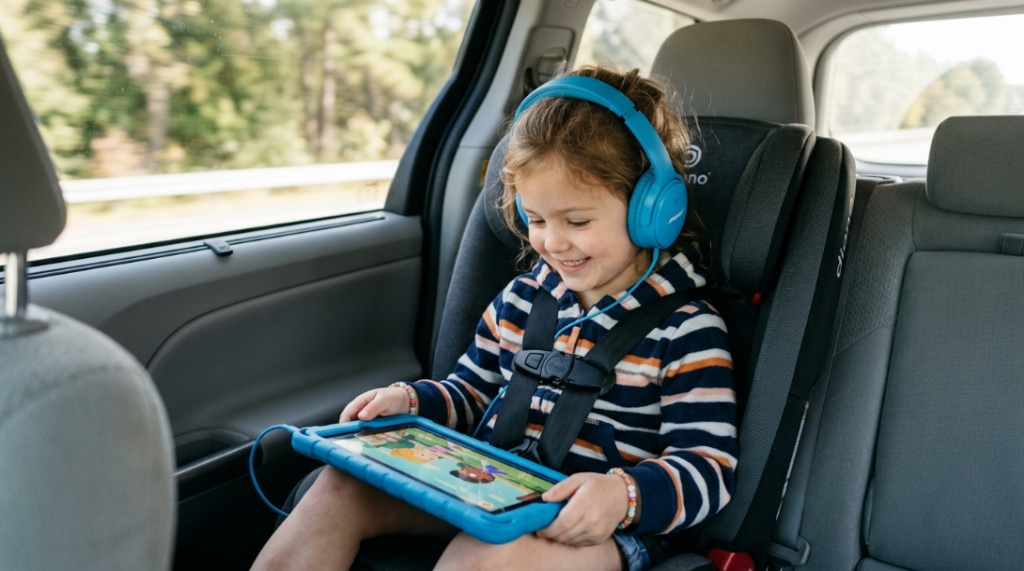
- Comfortable fit: If your child won’t wear them, every other feature is worthless.
- Some form of noise reduction: Whether active or good passive isolation, they need to actually reduce noise.
- Durable construction: At minimum, a flexible headband that bends without snapping.
Nice-to-Have (Worth Paying $10-20 More)
- Active noise cancellation: Significantly more effective than passive alone, especially in loud environments.
- Wireless/Bluetooth: Convenient but not critical. Wired works perfectly fine for kids.
- Built-in microphone: Useful for online classes.
- Foldable design: Easier to pack and store.
Skip at Budget Prices (Not Worth the Trade-offs)
- App integration: Adds cost, rarely used by kids, sometimes introduces volume bypass bugs.
- Customizable EQ: Kids don’t need bass boost profiles. Simple is better.
- Premium unboxing experience: You’re paying for packaging, not performance.
- Brand-name cachet: A $30 iClever can outperform a $60 branded headphone on actual safety metrics.
Which Affordable Noise Cancelling Headphones for Kids Are Best in 2026?
After analyzing specifications, parent reviews, and safety certifications, here are the top budget-friendly options that don’t sacrifice what matters:
| Model | Noise Reduction | Volume Limit | Battery | Weight | Price | Best For |
|---|---|---|---|---|---|---|
| iClever BTH12 | ANC (Moderate) | 85 dB | 45 hrs | 165g | $30-40 | Best overall value |
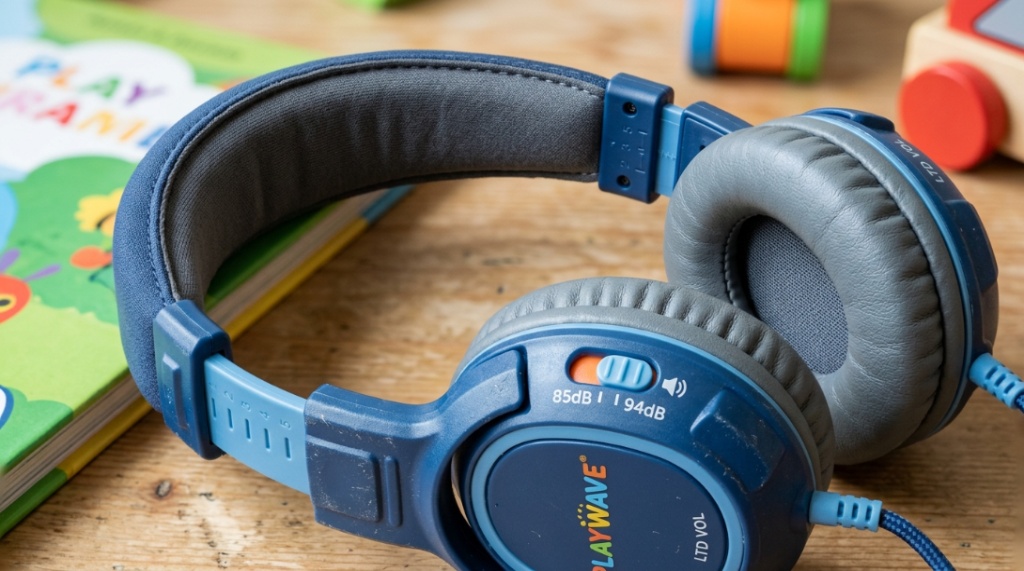
| iClever BTH03 | Passive (Good) | 85/94 dB | 25 hrs | 150g | $22-28 | Ultra-budget pick |
| JLab JBuddies Studio | Passive (Good) | 85 dB | 24 hrs | 170g | $25-35 | Everyday use |
| Mpow CH9 | ANC (Moderate) | 85 dB | 20 hrs | 175g | $35-45 | Budget ANC |
| BuddyPhones Cosmos+ | ANC (Good) | 75/85/94 dB | 26 hrs | 195g | $70-90 | Worth the upgrade |
Best Overall Budget Pick: iClever BTH12
At $30-40, the iClever BTH12 delivers what shouldn’t be possible at this price: genuine active noise cancellation, an 85 dB volume limit, Bluetooth 5.2, and a staggering 45-hour battery life. The ANC isn’t as powerful as premium options—expect an 18-22 dB reduction versus 30+ from a Puro—but for homework focus, casual travel, and everyday noise protection, it’s genuinely effective.
Comfort is solid for the price: memory foam ear pads, lightweight 165g design, and an adjustable headband that fits ages 4-12. The included aux cable means they work wired too, which is perfect for school tablets.
Best Under $30: iClever BTH03
If ANC isn’t in the budget, the BTH03 provides strong passive isolation with well-sealed ear cups that block 12-18 dB naturally. At $22-28, they’re the cheapest route to genuinely safe listening headphones for kids. The dual volume modes (85/94 dB) let you set stricter limits for younger children.
How Can You Tell If Cheap Headphones Are Actually Safe?
Not all budget headphones deliver on their safety claims. Here’s how to verify before buying:
Check for independent volume testing: Reputable brands publish their volume-limiting data or have it verified by third parties. If a brand only says “volume limited” without specifying the actual dB level, be cautious.
Look for certifications: CPSIA (Consumer Product Safety Improvement Act) compliance means the product has been tested for children’s safety standards. FCC certification indicates proper electronic testing.
Read parent reviews specifically mentioning volume: The most reliable verification comes from parents who’ve actually measured output with sound level meter apps. Search reviews for terms like “measured” or “sound meter.”
Test the aux cable bypass: Some headphones with wireless volume limiting lose that protection when connected via an aux cable, allowing unrestricted volume from the source device. Quality safe listening headphones maintain their limit in both modes.
Check materials safety: The product listing should mention BPA-free, phthalate-free, or specific material safety standards. If materials aren’t mentioned at all, the manufacturer may not have tested them.
What’s the Real Difference Between $30 and $100 Kids’ Headphones?
Let’s be transparent about what you’re gaining—and what you’re not—at higher price points:
ANC Effectiveness: Budget ANC (18-22 dB reduction) handles moderate noise—household sounds, classroom chatter, and car rides. Premium ANC (28-35 dB) tackles airplane engines, construction, and very loud environments. If your primary use case is home/school, budget ANC is sufficient.
Build Quality: Premium headphones use higher-grade plastics, metal hinges, and thicker padding. They last 2-3 years versus 1-2 years for budget options. However, since kids outgrow headphones and tastes change quickly, a $30 pair replaced annually may actually be more practical than one $100 pair.
Comfort Over Time: This is where premium genuinely shines. Better memory foam, softer headband padding, and lighter weight reduce fatigue during extended wear. For all-day school use or long flights, comfort improvements are noticeable.
Sound Quality: Premium drivers deliver clearer, richer audio. For music enjoyment, the difference is real. For audiobooks, white noise, and educational content—which is most of what kids listen to during study—budget drivers are perfectly adequate.
How Do You Choose the Right Size for Your Child?
Fit directly impacts both comfort and noise reduction effectiveness. Here’s a quick sizing guide:
Ages 2-4: Look for headphones specifically labeled for toddlers. Headband circumference should be adjustable from about 15-17 inches. Over-ear cups should be smaller (5-6 cm opening).
Ages 4-8: Standard “kids” headphones fit this range. Adjustable headband from 16-19 inches. Ear cups with a 5.5-6.5 cm opening. Most budget options target this age group.
Ages 8-12: Some kids this age can fit smaller adult headphones, but kids’ models still provide better volume protection. Look for “teens” or “tweens” sizing with a headband up to 20 inches.
The best check: ear cups should fully surround your child’s ears without pressing on them. If the ear cup sits ON the ear rather than around it, it’s too small. If there are visible gaps between the pad and skin, it’s too large.
For families looking for specific recommendations tailored to your region, this resource on budget-friendly noise-canceling headphones for kids provides detailed reviews of options available at various price points.
What Common Mistakes Do Parents Make When Buying Budget Kids’ Headphones?
Avoid these traps that waste money or compromise safety:
- Buying adult headphones in small sizes: Adult headphones lack volume limiting and are designed for adult ear anatomy. Even physically fitting ones can damage children’s hearing.
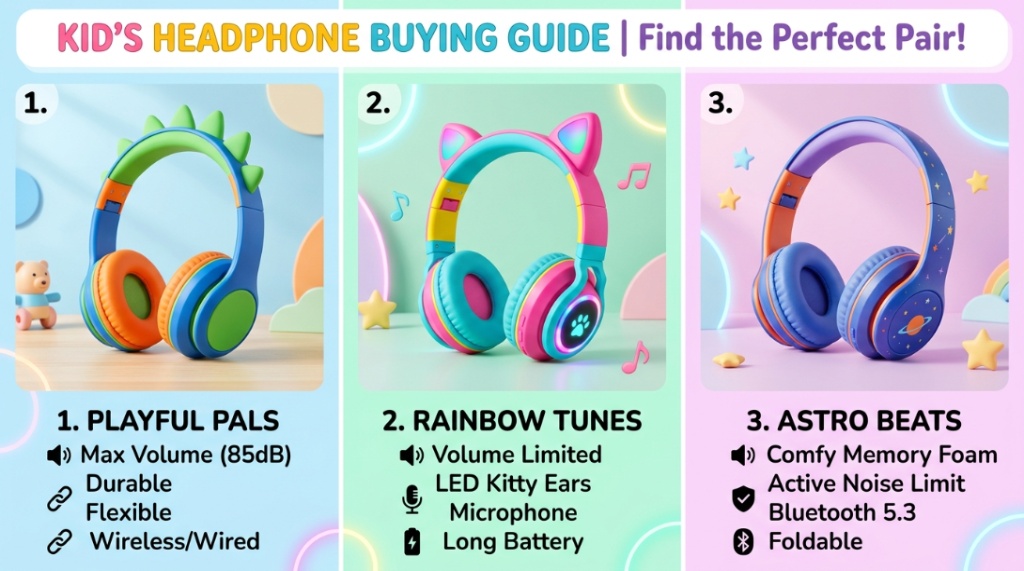
- Choosing by looks alone: Flashy LED lights and cartoon designs often mask inferior audio components and missing safety features. Function over form.
- Ignoring the aux cable volume bypass: Test this before trusting the headphones in loud environments.
- Buying the cheapest no-name option: Below $15, you’re likely getting headphones with inaccurate volume claims, poor noise isolation, and questionable materials. The $22-30 range is the true budget floor for quality.
- Not considering use case: A child who only uses headphones at a quiet desk doesn’t need ANC. A child who travels weekly needs it. Match the investment to actual needs.
- Forgetting replacement ear pads: Check if the model offers replacement pads. Daily-use headphones need fresh pads every 6-12 months for hygiene and performance. Some budget models make this impossible.
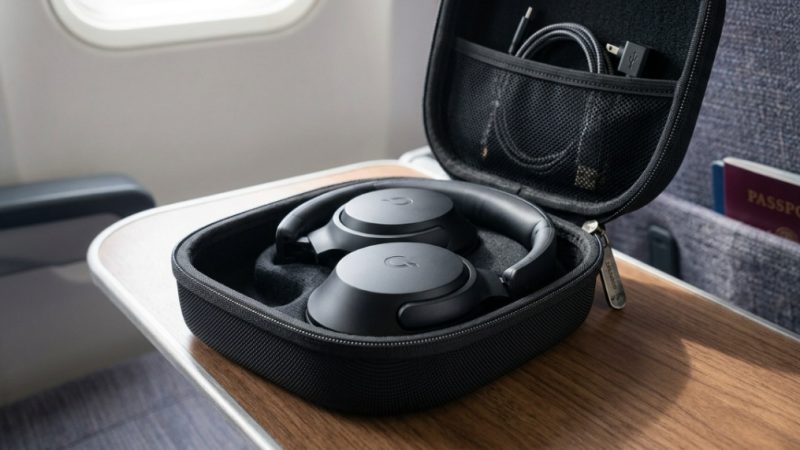
Finding the right pair isn’t just about blocking out background chatter at home; it’s also about how well they pack away into a backpack. If you frequently find yourself preparing for long flights or family road trips, you will want to pick travel-friendly noise cancelling headphones for kids that feature foldable designs and long-lasting battery life. Ensuring they are lightweight and compact makes it much easier for little ones to manage their own gear on the move.
How Long Should Affordable Kids’ Headphones Last?
Realistic expectations based on price tier:
$20-30 headphones: 8-14 months of daily use. Ear pads will compress and flatten first, followed by headband loosening. Budget for annual replacement.
$30-50 headphones: 12-18 months of daily use. Better materials slow degradation. Battery capacity decreases noticeably around 14 months for wireless models.
$50-80 headphones: 18-30 months. Premium materials and build quality show their value in longevity. Often outlast the child’s head size rather than breaking down.
Pro tip: Buy two identical pairs if you find affordable noise-canceling headphones for kids that your child loves. Kids lose things, headphones break at the worst times, and having a backup means no disruption to established routines.
Be aware of potential additional costs:
- Replacement ear pads: $8-15 per set, needed every 6-12 months
- Replacement aux cables: $5-10; kids fray cables quickly
- Carrying case: $10-15 if not included (protects investment significantly)
- Audio splitter: $5-8 if two kids share one device
Total first-year cost for a $35 pair with accessories and replacements: approximately $50-60. Still far less than a single premium model, with the same safety features that matter most.
FAQ
Are cheap noise-canceling headphones actually safe for kids?
Yes, if they have a verified 85 dB volume limit. The price of a headphone doesn’t determine its safety—the volume-limiting circuit does. A $30 pair with proper limiting is safer than a $150 pair without it. Check specifications and reviews for confirmed volume measurements.
What’s the minimum I should spend on kids’ noise-canceling headphones?
For genuine active noise cancellation with volume limiting, $28-35 is the realistic floor in 2026. Below that, you’ll find passive-only isolation (still useful) or ANC claims that don’t hold up under testing. The iClever BTH12 at around $32 represents the entry point for legitimate budget ANC.
Do affordable kids’ headphones break faster than expensive ones?
Generally yes — expect 8-14 months versus 18-30 months for premium. However, the math often favors replacing a $30 pair annually over buying one $90 pair that still eventually breaks. Kids outgrow sizes too, making annual replacement natural anyway.
Can I just use the volume limiter on my phone instead of buying kids’ headphones?
Software volume limits are a supplement, not a substitute. They can be accidentally changed, overridden by apps, or bypassed when switching between wired and wireless. Hardware volume limiting in the headphone itself provides a reliable, consistent cap regardless of the source device’s settings.
What’s the difference between noise-canceling and noise-isolating for kids?
Noise isolating (passive) uses physical barriers—padded ear cups that seal around the ear—to block sound. Noise canceling (active/ANC) adds electronic processing that generates anti-noise waves. ANC is more effective, especially against low-frequency sounds, but costs more and requires battery power.
Are wireless headphones safe for kids’ developing brains?
Bluetooth headphones emit extremely low levels of non-ionizing radiation — far less than a smartphone held to the ear. Major health organizations (WHO, FDA, AAP) have not found evidence of harm from Bluetooth device use. If you’re concerned, wired headphones eliminate this entirely while maintaining all safety features.
How do I know if the volume limit is actually working?
Download a free sound level meter app (NIOSH SLM for accuracy). Place the phone microphone against the headphone speaker at max volume with music playing. The reading should not exceed 85-87 dB. If it reads higher, the headphones aren’t limiting properly and shouldn’t be trusted for children.